

The Bukharian Jews


The Bukharian Jews are among the oldest and most culturally unique Jewish diaspora communities in Central Asia, with a history spanning over 2,500 years. Local customs state that the community began during the Babylonian exile after the First Temple was destroyed in 586 BCE. Later, Persian Jews migrated along the Silk Road trading routes during the Achaemenid Empire, establishing homes in the ancient emirates of Bukhara, Samarkand, and Khiva, which are located in present-day Uzbekistan, Tajikistan, and Turkmenistan.
These Jews, who lived under several Islamic regimes for centuries, adopted Bukharian or Bukhori, a unique dialect of the Tajik-Persian language written in the Hebrew alphabet, in order to adapt to their surroundings while upholding a very traditional Jewish way of life. Due to their dhimmi status as a religious minority under Islamic rule, they were subject to severe clothing codes, high taxes, and prohibitions on constructing synagogues. Despite this, they were often able to maintain local autonomy, creating prosperous communities of merchants, weavers, and dyers. When Rabbi Yosef Maimon from Morocco arrived in Central Asia in 1793, he revitalized religious life, introduced Sephardic liturgy, and restored the community's ties to the rest of the Jewish world, reversing the spiritual decline that had eventually resulted from the region's isolation from mainstream Jewish centers.
The Russian Empire's conquest of Central Asia in the middle of the 19th century resulted in the creation of Russian Turkestan territory and a golden age for the Bukharian Jews. They profited from increased trade rights, quickly became wealthy from the cotton industry, and started financing a large-scale migration to Jerusalem in the 1890s, where they founded the renowned Bukharim Quarter, which is renowned for its opulent homes and grand architecture. Although many families secretly upheld their religious practices, particularly circumcision and kosher dietary laws, this prosperity was abruptly disrupted by the 1917 Bolshevik Revolution and the Sovietization of Central Asia that followed. This led to the confiscation of private wealth, the systematic closure of Jewish schools and synagogues, and the forced integration of the community into the Soviet secular system. Nearly the entire community left the Soviet Union in 1991 due to political unpredictability, economic instability, and the emergence of local nationalism. Hundreds of thousands of people left, mostly to Israel and the United States, especially the Queens, New York neighborhood of Rego Park. Even though there are now only a few hundred elderly members of the ancient Bukharian Jewish community in Central Asia, their rich cultural legacy is still very much alive in their new homes, where they actively preserve their distinctive musical style known as "Shashmaqam," their ornate traditional silk robes known as "jomahs," and their renowned culinary customs like "plov" and "bakhsh."
Bukharian Jews established the Bukharim Quarter (Sh'hunat HaBukharim) in 1891 with the goal of creating a stately neighborhood in Jerusalem that would symbolize their success along the Silk Road. Constructed on a grid layout with broad streets, it resembled European towns, which was unusual for Jerusalem at this time. Features enormous stone palaces with arched windows in the Italian style, interior courtyards, and lofty ceilings. The Armon, or Yehudayoff Palace, was constructed to welcome the Messiah. The neighborhood's ancient facades still stand, but Haredi (ultra-Orthodox) Jewish families now make up the majority of its residents.
"Six Modes" is the literal translation of Shashmaqam, the traditional classical music style of Central Asia. It combines Jewish religious scriptures, Persian vocal melodies, and Sufi mystical poetry. It is dominated by the Doira (frame drum), Gijak (spike violin), and Tanbur (long-necked string instrument). In the courts of Central Asian emirs, Bukharian Jewish musicians were traditionally the main practitioners and guardians of this musical style. Specialized ensembles that perform at historic events in Israel and New York actively preserve it.
Bukharan Jews
Bukharan Jews
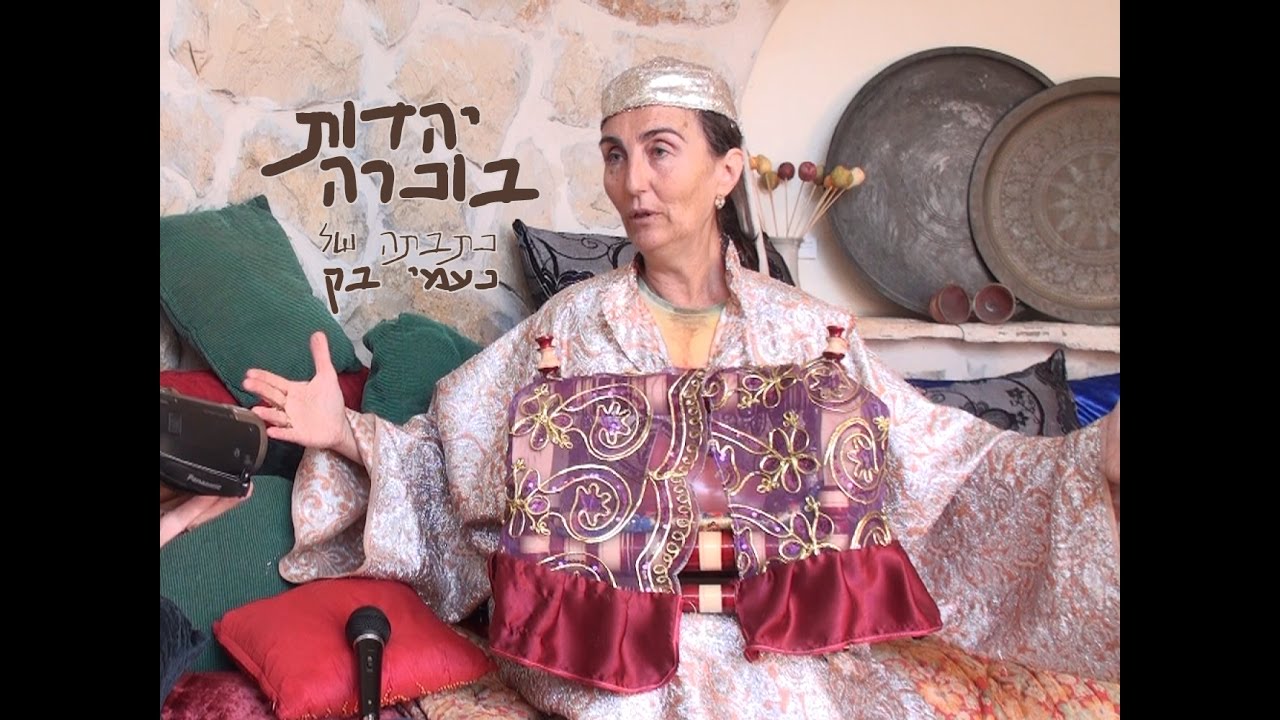
יהדות בוכרה על רקע תרבות אוזבקיסטן

The History of the Bukhari Jews in Israel

Bukharan Jews: Memories of a Disappearing Past
