

THEATER
Intangible cultural heritage includes theatre; it refers to traditional theatre forms that are part of a community's living heritage, which means it includes elements of traditional theatre practices that communities consider part of their cultural heritage and that are being passed down from generation to generation. It gives people a sense of identity and belonging. These can include: Dance-theatre or music-theatre, ritual theatre linked to religious or seasonal events, puppetry and shadow theatre, classical or traditional drama with specific costumes, music, and staging. To realize the performance, one must take care of the stories and scripts, the music and instruments, the costumes, masks, and the skills and knowledge needed to perform and transmit it. All of that together makes up the intangible heritage of theatre in a particular community or country. Each of these is more than just a show. It’s a tradition rooted in a community’s history, beliefs, and way of life. That’s why they are considered theatre-related Intangible Cultural Heritage.
The Historical Development and Contemporary Landscape of Israeli Theater
The Origins: Foundations and First Experiments (1890–1920s)
The origins of organized Hebrew theatrical framework trace back to 1905, when pioneers of the Second Aliyah established an amateur troupe in Jaffa designated as "The Society of Dramatic Art Lovers." This initiative was preceded by earlier sporadic performances, notably a staging of Moshe Leib Lilienblum’s Zerubavel by David Yellin at the Lemel School in Jerusalem during the Sukkot holiday of 1890. Additionally, during Chol Hamoed Pesach in 1894, another amateur vanguard ensemble produced Avraham Goldfaden’s Shulamit at the Leon Stein factory premises in Jaffa.
The constituency of "The Society of Dramatic Art Lovers" included several individuals who would subsequently participate in the founding of Tel Aviv, such as Abba Ne'eman and Yehudit Harari. The repertoire generated during this period primarily explored Jewish historical themes, exemplified by productions of Karl Gotzkow’s Uriel d'Acosta, The Hasmoneans, Eliezer Ben-Yehuda’s Yiftach's Daughter, and Jean Racine’s Esther. Concurrently, Yiddish-language productions were also presented to audiences.
In a parallel international development, the Habimah Theater was established in Moscow in 1917 under the directorial tutelage of the Russian master Constantin Stanislavsky. Driven by the prominent acting talent of Hanna Rovina—who would subsequently be recognized as the First Lady of Hebrew Theater—Habimah uniquely committed itself to staging productions exclusively in Hebrew. This ideological stance stood in stark contrast to the contemporary Bund Theater, which prioritized the preservation and proliferation of Yiddish language and cultural heritage.
By 1920, David Davidov initiated the first formal Hebrew theatrical institution within Tel Aviv, titled "The Hebrew Theater in Eretz Israel." This ensemble featured prominent actors including Miriam Bernstein-Cohen, Ari Kutai, and Meir Teomi. The enterprise subsequently transitioned into the "Dramatic Theater" under the directorship of Bernstein-Cohen; however, due to systemic difficulties in executing classical repertoires successfully, the institution eventually pivoted toward light entertainment.
In 1923, a faction of five actors from the Dramatic Theater relocated to Germany to undertake formal training in dramatic arts under the mentorship of Max Reinhardt. Upon returning to the region in 1926, they co-founded "The Eretz Israel Theater" alongside director Menachem Gnessin. Factional shifts continued when, in 1927, several performers defected from this institution to inaugurate a specialized satirical theater named "The Kettle," operating under the stewardship of Avigdor Hameiri.
The Rise of Labor Theater and Pre-State Expansion (1925–1940s)
The year 1925 marked the establishment of the Histadrut Workers' Theater, known as "Ohel" (Haoel), founded by Moshe Halevi. The explicit socio-cultural mandate of Ohel was to provide high-quality theatrical access to the working class while mounting productions aligned with Zionist-Socialist ideologies. The repertoire incorporated biblical scenes reinterpreted through the lens of socialist morality, as demonstrated by Stefan Zweig’s Jeremiah and Creshnikov’s Jacob and Rachel.
Ohel remained culturally active until the 1960s, achieving widespread acclaim for productions such as The Brave Soldier Schweik, which starred the celebrated actor Meir Margalit. Other notable company members included Abraham Halfi and Yaakov Einstein, while Nahum Benari emerged as one of the institution’s most prominent original playwrights. Furthermore, the distinguished poet and writer Nathan Alterman contributed to Ohel by translating classical French stage pieces, including Molière’s The Imaginary Patient.
During the 1930s, the demographic influx of the Fifth Aliyah brought a substantial volume of actors, directors, and theater practitioners from the German-speaking world to Eretz Yisrael. This migration catalyzed the proliferation of dozens of performance spaces, ranging from classical dramatic stages to intimate cabarets, though many of these small-scale installations proved short-lived.
By 1931, the Habimah Theater company permanently relocated its operations from Moscow to Tel Aviv. Over time, the synthesis of diverse backgrounds among playwrights, actors, directors, and producers facilitated the blending of foreign European traditions with localized elements, culminating in the gradual crystallization of a distinctive Israeli theatrical idiom.
In 1944, Moshe Walin established the comedic theater "Li-le-Lu," an enterprise specializing in a varied arrangement of light satirical plays and musical compositions. The lyrical content for these productions was primarily authored by Avraham Shlonsky and Natan Alterman, with performances popularized by Yemenite vocalists, most notably Shoshana Damari. Concurrently, the pre-existing "Broom" (Matateh) satirical theater maintained its operations alongside these newer contemporary reviews.
Contemporary Institutional Framework and Major Companies
In the modern era, the Israeli theatrical landscape has achieved global integration. Numerous domestic companies routinely tour Eastern and Western Europe as well as the United States, participating in prestigious international forums such as the Edinburgh and Berlin Festivals. Concurrently, localized semi-professional and amateur ensembles serve minority language populations by performing repertoires in English and Russian. The domestic canon is defined by globally recognized playwrights, including the late Hanoch Levine, Yehoshua Sobol, Hillel Mittelpunkt, and the late Ephraim Kishon.
Theater
Theater
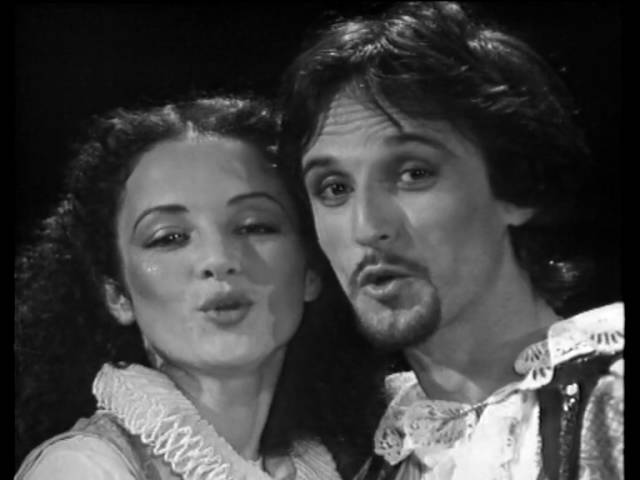
סופרים מספרים - שלמה ניצן

קומדיה-סעיד-וסעידה-אהרון-עדן-חלק-1.flv

הרפתקה בעיירה - המחזמר של בצלאל המספר
