
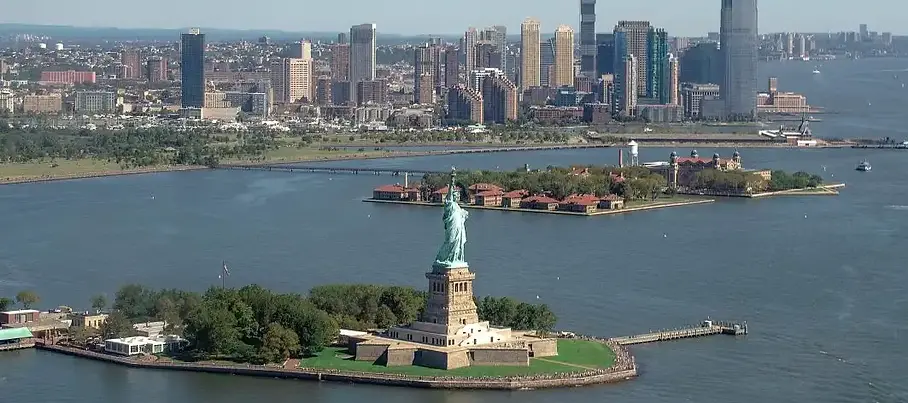
The Jews from the United States of America
Jewish life in what is now the United States begins in September 1654, when twenty-three Jewish refugees from Recife, Brazil, arrived in New Amsterdam after the Portuguese reconquest of their city. They were a mixed company of Sephardim and Ashkenazim, and together they founded the congregation that became "Shearith Israel". Later came German-speaking Jews in the nineteenth century, then, between 1881 and 1924, somewhere between two and two and a half million Jews from Eastern Europe, until restrictive immigration laws ended the great wave. Each group arrived with its own songs, stories, and foodways and negotiated them with American life. American Jewish heritage is therefore plural by nature, and it is best understood as a set of living practices carried by families and communities.

Jewish musical life in America began in the synagogue. As immigrants poured in, the "celebrity cantor" emerged as a public figure, and none was more celebrated than Yossele Rosenblatt. Born in Bila Tserkva in the Russian Empire, he came to New York in 1912 to serve Congregation Ohab Zedek, was widely recorded, sang at Carnegie Hall, and was nicknamed the "Jewish Caruso." The klezmer, the instrumental music of Jewish weddings, came over the ocean, too. Clarinetists Dave Tarras and Naftule Brandwein, both born in Eastern Europe, recorded the pieces in 1920s New York to be studied by future generations. It became unfashionable after the Second World War and was revived in the 1970s, when young performers approached Tarras directly or formed new bands like the Klezmer Conservatory Band (Boston, 1980) and the Klezmatics.

Jewish storytelling combines sacred text, folklore, and humor, and in America it found new voices. Sholem Aleichem's Yiddish stories of "Tevye the dairyman" became the foundation of "Fiddler on the Roof", while Isaac Bashevis Singer, who emigrated from Poland in 1935 and wrote for the "Yiddish Forverts" in New York, received the Nobel Prize in Literature in 1978 for work written in Yiddish. Jewish humor, from Borscht Belt comedians to contemporary stand-up, grew from the same soil. Its rapid-fire, self-deprecating style turns hardship into laughter. Family stories of migration, retold at holiday tables, remain the most intimate form of memory.
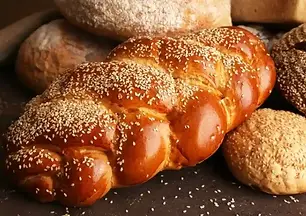
Food is among the most powerful carriers of memory. Historian Hasia Diner has shown, in "Hungering for America", how Jewish, Italian, and Irish immigrants used food to negotiate identity in a new land. Dishes such as challah, matzo ball soup, gefilte fish, and latkes crossed the ocean and, with delicatessens and bakeries, became part of American urban life. The laws of kashrut continue to shape how many families eat, and holiday foods tie each household to a shared story.

Jewish dance known for its hora, which is itself derived primarily from the Romanian hora, was consciously collected by Israelis into a coherent tradition of Israeli folk dance in the 1940s. Following 1948, teachers like Fred Berk and Dvora Lapson introduced it into the U.S., where it formed part of the repertory of Jewish youth movements, camps, and community centers where it teaches identification through movement. In the concert world, Jewish choreographers have been notable figures in American modern dance. Anna Sokolow, who grew up on the Lower East Side and danced with Martha Graham's company in its early years, choreographed "The Exile" in 1939, her first work with overtly Jewish themes, and subsequently worked in Israel at Jerome Robbins' urging. Pauline Koner, whose parents were Russian Jewish immigrants, choreographed "Chassidic Song and Dance" in 1932, in which she herself performed as a Hasidic boy. Jerome Robbins started his career in a Yiddish Art Theater production and later choreographed "Fiddler on the Roof" (1964).

American Judaism is remarkably diverse. The Orthodox, Conservative, Reform, and Reconstructionist movements coexist alongside many unaffiliated forms of Jewish identity. Differences in rite appeared early: Ashkenazim were already the majority in New York by 1728, and in 1825 some of them left Shearith Israel to found their own congregation, "B'nai Jeshurun". Today, shared practices such as Shabbat, the High Holy Days, Passover, and life-cycle rites are lived in many different ways.

Many Jewish festivals follow the agricultural cycle: Tu BiShvat marks the new year of the trees, Sukkot celebrates the harvest, and Shavuot is linked to the first fruits. A sukkah built on a suburban lawn or a city balcony shows this ancient attention to the seasons adapted to modern settings. America also saw a surprising chapter of Jewish farming. In 1891, the Baron de Hirsch Fund established the Woodbine colony in southern New Jersey, and many settlers, though inexperienced in farming, stayed on the land. By 1925, the New Jersey colonies were the only survivors of the Jewish agricultural colonies, and in the 1950s Jewish poultry farmers produced roughly three-quarters of the state's eggs. In the Catskills, farmers turned their houses into boarding houses, giving rise to the Borscht Belt resorts.

For the immigrants, Yiddish theater was both a piece of home and a school of American life. Along Second Avenue, nicknamed the "Yiddish Broadway," theaters rose in rapid succession: the Second Avenue Theater (1911), the National, built for Boris Thomashefsky and Jacob Adler (1912), and later Maurice Schwartz's Yiddish Art Theatre, founded in 1918 and housed on the avenue from 1926. Molly Picon, introduced to American audiences in 1923, became the first lady of its musical stage, and playwrights such as Jacob Gordin pushed the repertoire toward more serious drama. Its influence reached well beyond its own audience. Teachers such as Stella Adler and Lee Strasberg had their first taste of theater on Second Avenue, and the Yiddish stage left its mark on the Catskills comic tradition, early television, and Broadway productions such as Fiddler on the Roof.

Ritual life has long called for skilled making: Torah ornaments, kiddush cups, Hanukkah lamps, mezuzot, and marriage contracts (ketubot) continue to occupy a central place in Jewish homes and synagogues. America also gave Jewish labor a special visibility. About 40 percent of Eastern European Jewish immigrants worked in the garment industry, and the United Hebrew Trades, founded in 1888, united many Jewish unions. Philanthropy created training opportunities as well, such as the Baron de Hirsch Trade School, founded in 1895 to offer instruction in the mechanical trades. These histories link Jewish craft to the struggle for dignified work.

Links
Today, scholars, archives, and communities work to document and share this heritage. Second Avenue Online preserves the memory of New York's Yiddish theater, the Milken Archive of Jewish Music offers recordings and scholarship on American Jewish music, and the Jewish Women's Archive records the lives of women such as Anna Sokolow and Pauline Koner. Farming Communities of New Jersey tells the story of Jewish farmers, Adamah continues the environmental tradition, and My Jewish Learning offers accessible introductions to Jewish life. Like all intangible heritage, this tradition lives only as long as people practice and share it.
The American Jews: A Historical Overview
Beginnings (1654–1775)
The genesis of the American Jewish experience dates to September 1654, marked by the arrival of twenty-three Sephardic Jews of Spanish and Portuguese extraction in New Amsterdam (subsequently renamed New York City). This group was fleeing persecution following the Portuguese recapture of Recife, Brazil. Although initially met with overt hostility from Governor Peter Stuyvesant, they secured residency, trading rights, and settlement privileges through the intervention of the Dutch West India Company. Over the ensuing decades, nascent Jewish enclaves materialized across pivotal maritime centers, notably Newport, Savannah, Charleston, and Philadelphia. With the outbreak of the American Revolutionary War, the preponderance of the Jewish populace aligned with the patriot cause led by George Washington[1].
The Migration (1820–1880)
Catalyzed by severe economic disenfranchisement and pervasive political instability across Europe, the American Jewish demographic experienced exponential growth, surging from approximately 3,000 individuals in 1800 to an estimated 250,000 by 1880. This demographic shift was dominated by Ashkenazi Jews originating from Germany and Central Europe. In stark contrast to their urban Sephardic predecessors, these German Jewish immigrants dispersed extensively throughout the Midwestern, Southern, and Western United States. Many initially operated as itinerant peddlers before accumulating the capital required to establish permanent retail and dry-goods enterprises. Concurrently, this era witnessed the institutionalization of Reform Judaism. Under the theological leadership of Rabbi Isaac Mayer Wise, this movement sought to acculturate traditional halakhic practices to align with contemporary American civic and cultural paradigms[2].
The Mass Eastern European Influx (1881–1924)
The assassination of Tsar Alexander II in 1881 precipitated a wave of violent anti-Semitic pogroms across the Russian Empire, instigating a massive demographic exodus. Over the subsequent four decades, more than two million Jewish immigrants from Russia, Poland, and Romania arrived on American shores. The vast majority of these arrivals concentrated within dense, impoverished urban enclaves, most iconically New York City’s Lower East Side. This population provided the primary labor force for the burgeoning American garment industry, often enduring grueling conditions within sweatshops. Simultaneously, they forged a robust, self-sustaining Yiddish-speaking subculture characterized by a prolific press, theatrical productions, and literature. In response to systematic exploitation, these immigrants became instrumental in organizing the American labor movement and pioneering progressive socioeconomic reforms[3].
Sociopolitical Integration (1925–1945)
By the second generation, the descendants of Eastern European immigrants demonstrated profound upward mobility, achieving rapid academic and professional integration. This swift ascension, however, provoked a nativist backlash. This hostility culminated federally in the restrictive Immigration Act of 1924, and institutionally through the implementation of unofficial numerus clausus (enrollment quotas) designed to limit Jewish admission at elite universities such as Harvard and Columbia. During the Second World War, the American Jewish leadership faced complex geopolitical obstacles as it sought to pressure the Roosevelt administration into enacting robust rescue operations for European Jewry. Concurrently, the United States served as a critical intellectual sanctuary for eminent exiled Jewish scholars, scientists, and philosophers, including Albert Einstein and Hannah Arendt[4].
Post-War Suburbanization (1945–2000)
The post-1945 era was defined by rapid conventionalization, as American Jews transitioned in mass from dense inner-city neighborhoods to newly developed suburban communities. This period of social stability allowed for heightened civic engagement; during the 1960s, American Jews participated actively in the Civil Rights Movement. This alliance was famously personified by Rabbi Abraham Joshua Heschel marching alongside Dr. Martin Luther King Jr. in Selma, Alabama. Furthermore, the establishment of the State of Israel in 1948, coupled with the existential crisis of the 1967 Six-Day War, forged an enduring geopolitical, philanthropic, and ideological consensus that permanently linked American Jewry to the Jewish state[5].
Pluralism and Polarization (21st Century)
In the contemporary era, the United States harbors an estimated 7.5 million Jewish citizens, positioning it as the world’s second-largest Jewish population center alongside Israel. It is estimated that there are approximately 150,000 to 170,000 American Jews (immigrants born in the United States and their children) living in Israel[6].
Jews from the USA
Jews from the USA

The History of Jewish Americans in St. Louis | Living St. Louis
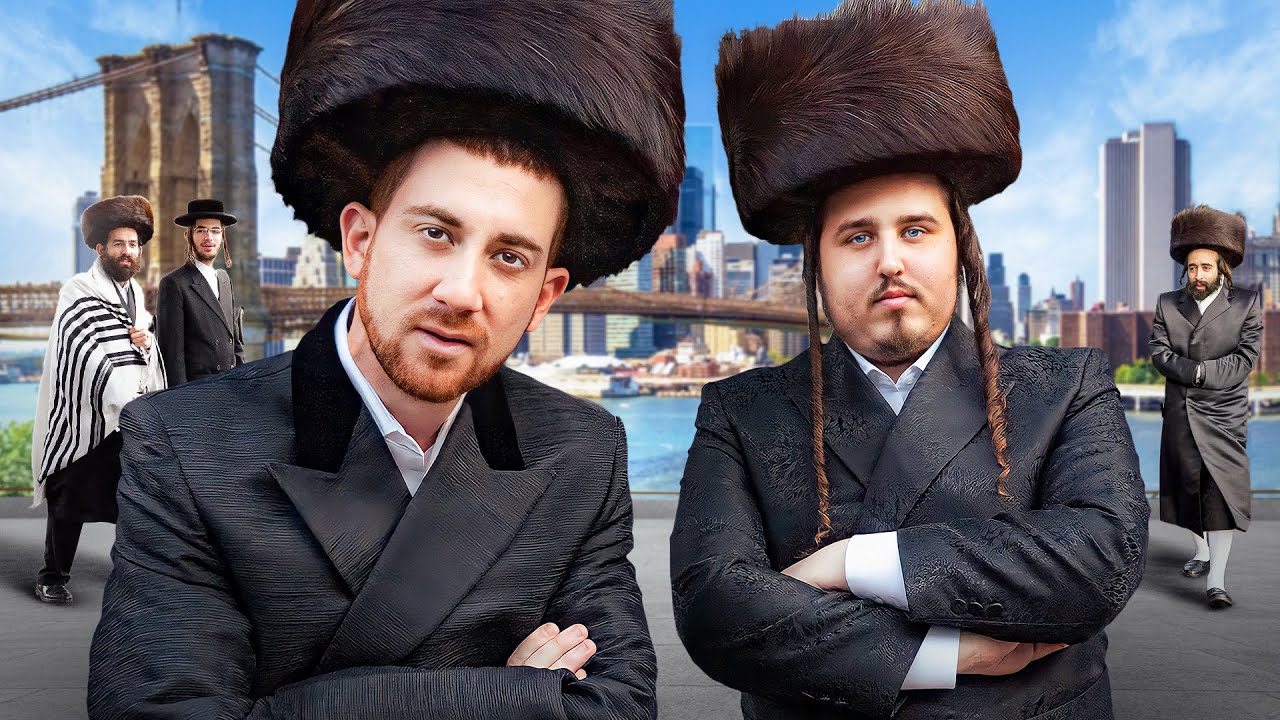
Entering America’s Most Religious Community

New York's Orthodox Jews: a City Within a City
Links
-
Anti-Defamation League (ADL): Fights antisemitism, bias, and bigotry through education, law enforcement training, and advocacy.
-
American Jewish Committee (AJC): Focuses on global Jewish advocacy, civil rights, and building intergroup coalitions.
-
Conference of Presidents of Major American Jewish Organizations: Serves as the primary contact for the executive branch on behalf of the American Jewish community.
-
Jewish Federations of North America (JFNA): Represents over 140 Jewish Federations that raise and distribute billions annually for social welfare and community services.
-
American Jewish Joint Distribution Committee (JDC): Coordinates global humanitarian relief, aiding Jewish communities and others in crisis worldwide.
-
HIAS (Hebrew Immigrant Aid Society): Provides humanitarian aid and assistance to refugees and immigrants worldwide based on Jewish values.
-
American Jewish Historical Society (AJHS): Preserves the oldest national ethnic historical organization's documents and artifacts in the US.
-
Museum of Jewish Heritage: Serves as New York's Holocaust memorial, educating visitors about Jewish life before, during, and after the Holocaust.
-
Union for Reform Judaism (URJ): Represents the largest Jewish denomination in North America, connecting Reform congregations.
-
United Synagogue of Conservative Judaism (USCJ): Supports and connects Conservative congregations across the continent.
-
Orthodox Union (OU): Supports Orthodox synagogues, youth programs, and operates the world's largest kosher certification agency.
Sources for the Historical Overview
-
The Rest of Mankind History Podcast, American Jewish Historical Society.
-
American Jewish Origins Essays (1654-1820), The Gilder Lehrman Institute of American History.
-
Sephardic Jews in America Historical Overview, Jewish Heritage Alliance.
-
The Jewish Americans Documentary Series Resources, PBS Educational Media.
-
Biography and Ethical Teachings of Abraham Joshua Heschel, Shoah Memorial.
-
Demographics and Migration Trends Study, The Jerusalem Post