

The Yemenite Jews
Yemenite Jews trace their roots back to Jewish communities that settled in Yemen as part of the broader Jewish diaspora. A significant event for this community was Operation Magic Carpet, which occurred between June 1949 and September 1950. During this time, the majority of Yemenite Jews fled to Israel due to severe persecution. Today, most Yemenite Jews reside in Israel, with smaller populations found in the United States and elsewhere. Yemenite Jews have unique religious practices that distinguish them from other Jewish groups. The earliest records of Judaism in Yemen date back to around 110 BCE, during the time of the Himyar kingdom. Many inscriptions from the second century mention synagogues built under the authority of Himyarite kings, reflecting a long-standing Jewish presence in the region[1].
Yemen was a thriving trade hub in the Greco-Roman era, which likely facilitated the influx of Jewish people from Roman Judea around 132 CE. Over time, religious customs within the Himyar kingdom evolved significantly. Interestingly, the presence of Jews in Yemen was largely accepted by local tribes. In 390, King Abu Karib of Himyar engaged in battle with the Jews of Yathrib but, after being treated by two Jewish doctors, he converted to Judaism. This conversion led to the widespread adoption of Judaism among the Himyar people. In fact, several Hebrew and Sabaean inscriptions from the fourth and fifth centuries commend the Himyar rulers for supporting the Jewish community[2].
Jewish people enjoyed a degree of religious freedom as "People of the Book" in exchange for paying an annual tax. However, the situation became dire around the tenth century when a Zaydi clan overthrew the more tolerant Sunni rulers. This shift marked the beginning of severe persecution against Jews in Yemen, and their legal standing worsened as discrimination from Muslim authorities increased, negatively affecting their social and economic conditions[3].
The Mawza Exile, which took place in 1679 under Al-Mahdi Ahmad's authority, saw the mass expulsion of Jews from throughout Yemen to the far-off province of Mawza. As a result, many Jews perished from malnutrition and illness. Up to two-thirds of the Jews who were banished perished. Numerous synagogues were demolished or turned into mosques, and their homes and belongings were taken. At the close of the 18th century, the Zaydis implemented a law known as the Orphan's Decree. It required the Zaydi state to protect and educate any Dhimmi child whose parents had passed away when he was a juvenile in an Islamic manner. During the Ottoman era (1872–1918), the Orphan's Decree was disregarded; nevertheless, it was revived under Imam Yahya (1918–1948). Jews were prohibited from touching Muslims or their food because they were viewed as impure. They had to move to the left, greet a Muslim first, and humble themselves in front of him. They were not allowed to ride horses or camels or construct homes higher than those of Muslims. A Jew was required to remove his shoes and walk barefoot when entering the Muslim district. Jews were prohibited from fighting Muslims if they assaulted them[4].
Yemenite Jews were mostly living in Sanaa (about 7,000), Sa'dah (about 1,000), Dhamar (1,000), Aden (200), the desert of Beda (2,000), Manakhah (3,000), and other locations around the start of the nineteenth century. Nearly all of them lived in the plateau's interior. In Yemen, they had 371 villages. Yemenite Jews were primarily artisans, such as coffee merchants in the south-central highland regions and gold, silver, and blacksmiths in the San'a region.
There were three waves of Jewish Yemeni emigration to Israel: from 1881 to 1918, from 1920 to 1950, and from 1990 to 2016. The majority of Yemenite immigrants had established their homes in Petach Tikvah, Rishon Lezion, Rehovot, Wadi Chanin (later called Ness Ziona), Be'er Ya'akov, Hadera (Nachliel), Zichron Yaakov, Yavne'el, Gedera, Ben Shemen, Kinneret, Degania, and Milhamia. Others decide to reside in the cities of Tel Aviv (Kerem Hateimanim), Jerusalem (Silwan and Nachalat Zvi), Jaffa, and eventually Netanya (Shekhunat Zvi)[5].
Up to 1,033 children of Yemenite immigrant families may have vanished from the camps between 1949 and 1951. After the parents were informed that their children were sick and needed to be admitted to the hospital, the children passed away. The parents learned later that some children had been abducted and placed with non-Yemenite families for adoption. In 2001, a seven-year public inquiry commission was unable to discover what happened. In the Yemenite Jewish children's case, 400,000 documents were made public in 2016. "They took the children and gave them away," Cabinet Minister Tzachi Hanegbi said to Israeli TV after re-examining information presented to a committee of inquiry in the late 1990s. I'm not sure where, but "At least hundreds" of youngsters were taken without their parents' permission, the minister said. Haaretz published a draft report on the affair in December 2021[6].
The Baladi, Shami, and Maimonideans, also known as "Rambamists"[7], are the three major Yemenite Jewish communities. The original Yemenite tradition, which was primarily based on the writings of Maimonides, and the Kabbalistic tradition represented in the Zohar and in the school of Isaac Luria, which became more and more influential starting in the 17th century, are the main causes of the differences between these groups:
-
The Baladi Jews: They often adhere to the legal decisions made by the Rambam (Maimonides) and recorded in his book, the Mishneh Torah.
-
The Shami Jews are those who adhere to rabbinic authority and the Sephardic/Mizrahi ritual.
-
The "Rambamists" are devout adherents of Maimonides' compilation of Talmudic law. They seek to uphold the Baladi tradition in its purest form. The Zohar and Lurianic Kabbalah are typically completely rejected by them. They believe that they are merely adhering to the oldest Torah preservation, which was documented in the Mishneh Torah based on their research.
The connection between Teman and divine revelation comes from a poetic verse in the Book of Habakkuk (3:3), which states: "God comes from Teman, and the Holy One from Mount Paran." While the Torah didn't start in Yemen, Yemenite Jews (Teimanim) are world-renowned for having preserved the most meticulous and unaltered version of the Torah text and its ancient pronunciation. Yemenite scrolls traditionally use geviel, a distinct dark brown leather processed with salt, flour, and wasp-pomegranate paste. They house the scroll in an ornate, multi-sided wooden case that stands upright during reading. They strictly maintain the ancient Talmudic custom of reading each verse aloud in Hebrew, followed immediately by a second reader translating it into the Aramaic Targum[8].
-
Operation Magic Carpet: the massive airlift of nearly 49,000 Yemenite Jews between late 1948 and September 1950, via the Jewish Virtual Library Operational Record.
-
Himyarite Inscriptions & Roman-Era Roots: comprehensive geological-historical charts mapping out the Red Sea trade route expansion, Semitic tribal integration, and the ancient capital of Zafar via the OpenStax World History Textbook Portal.
-
The Conversion of Abu Karib: the historical timeline surrounding King Abu Karib As'ad's 4th-century conversion to Judaism, which turned it into a prominent state religion in Southern Arabia, on the Jewish News Syndicate (JNS) Focus Project Briefing.
-
The Mawza Exile & Orphan's Decree: a thorough academic analysis of the 1679 expulsion to the Red Sea coast, the destruction of synagogues, and the legal implementation of the Orphan's Decree under Imam Yahya; you can consult peer-reviewed studies on the Cambridge University Press Academic Archive.
-
Early Agricultural and Urban Settlement Sites: historical profiles detailing how early Yemenite pioneers established and integrated into neighborhoods like Kerem HaTeimanim in Tel Aviv, Silwan in Jerusalem, and agricultural colonies like Rehovot and Petah Tikva via the World Jewish Congress Community Profiles.
-
Declassification of 400,000 Documents: The 2016 executive decision to open, digitize, and publish hundreds of thousands of state files regarding the missing toddlers via the Times of Israel State Archives Database Launch. You can also explore how independent researchers and families analyzed these scanned dossiers in the Jewish Review of Books Analytical Retrospective.
-
Baladi, Shami, and Rambamists: the distinct legal divergence between the original text-based Baladi tradition, the Kabbalah-influenced Shami liturgies, and the strict anti-Kabbalistic Rambamist factions; you can review the extensive community studies hosted on the Jewish Virtual Library Yemenite Heritage Archive.
-
Aramaic Targum Custom: detailed liturgical studies describing the mandatory, verse-by-verse public recitation of the Hebrew text followed immediately by the Aramaic translation via the Sotheby's Historic Judaica Curatorial Logs.

Jews from Yemen
Jews from Yemen
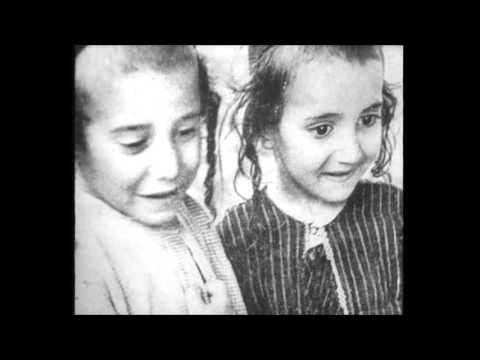
עליות תימן - על כנפי נשרים

Saving The Forgotten Jews - BBC News

Celebrating Jewish Yemenite Shabbat שבת dinner with singing of D'ror Yikra דרור יקרא (Israel, 1973)
