

The Jews from United States of America
Beginnings (1654–1775)
The genesis of the American Jewish experience dates to September 1654, marked by the arrival of twenty-three Sephardic Jews of Spanish and Portuguese extraction in New Amsterdam (subsequently renamed New York City). This group was fleeing persecution following the Portuguese recapture of Recife, Brazil. Although initially met with overt hostility from Governor Peter Stuyvesant, they secured residency, trading rights, and settlement privileges through the intervention of the Dutch West India Company. Over the ensuing decades, nascent Jewish enclaves materialized across pivotal maritime centers, notably Newport, Savannah, Charleston, and Philadelphia. With the outbreak of the American Revolutionary War, the preponderance of the Jewish populace aligned with the patriot cause led by George Washington[1].
The Migration (1820–1880)
Catalyzed by severe economic disenfranchisement and pervasive political instability across Europe, the American Jewish demographic experienced exponential growth, surging from approximately 3,000 individuals in 1800 to an estimated 250,000 by 1880. This demographic shift was dominated by Ashkenazi Jews originating from Germany and Central Europe. In stark contrast to their urban Sephardic predecessors, these German Jewish immigrants dispersed extensively throughout the Midwestern, Southern, and Western United States. Many initially operated as itinerant peddlers before accumulating the capital required to establish permanent retail and dry-goods enterprises. Concurrently, this era witnessed the institutionalization of Reform Judaism. Under the theological leadership of Rabbi Isaac Mayer Wise, this movement sought to acculturate traditional halakhic practices to align with contemporary American civic and cultural paradigms[2].
The Mass Eastern European Influx (1881–1924)
The assassination of Tsar Alexander II in 1881 precipitated a wave of violent anti-Semitic pogroms across the Russian Empire, instigating a massive demographic exodus. Over the subsequent four decades, more than two million Jewish immigrants from Russia, Poland, and Romania arrived on American shores. The vast majority of these arrivals concentrated within dense, impoverished urban enclaves, most iconically New York City’s Lower East Side. This population provided the primary labor force for the burgeoning American garment industry, often enduring grueling conditions within sweatshops. Simultaneously, they forged a robust, self-sustaining Yiddish-speaking subculture characterized by a prolific press, theatrical productions, and literature. In response to systematic exploitation, these immigrants became instrumental in organizing the American labor movement and pioneering progressive socioeconomic reforms[3].
Sociopolitical Integration (1925–1945)
By the second generation, the descendants of Eastern European immigrants demonstrated profound upward mobility, achieving rapid academic and professional integration. This swift ascension, however, provoked a nativist backlash. This hostility culminated federally in the restrictive Immigration Act of 1924, and institutionally through the implementation of unofficial numerus clausus (enrollment quotas) designed to limit Jewish admission at elite universities such as Harvard and Columbia. During the Second World War, the American Jewish leadership faced complex geopolitical obstacles as it sought to pressure the Roosevelt administration into enacting robust rescue operations for European Jewry. Concurrently, the United States served as a critical intellectual sanctuary for eminent exiled Jewish scholars, scientists, and philosophers, including Albert Einstein and Hannah Arendt[4].
Post-War Suburbanization (1945–2000)
The post-1945 era was defined by rapid conventionalization, as American Jews transitioned in mass from dense inner-city neighborhoods to newly developed suburban communities. This period of social stability allowed for heightened civic engagement; during the 1960s, American Jews participated actively in the Civil Rights Movement. This alliance was famously personified by Rabbi Abraham Joshua Heschel marching alongside Dr. Martin Luther King Jr. in Selma, Alabama. Furthermore, the establishment of the State of Israel in 1948, coupled with the existential crisis of the 1967 Six-Day War, forged an enduring geopolitical, philanthropic, and ideological consensus that permanently linked American Jewry to the Jewish state[5].
Pluralism and Polarization (21st Century)
In the contemporary era, the United States harbors an estimated 7.5 million Jewish citizens, positioning it as the world’s second-largest Jewish population center alongside Israel. It is estimated that there are approximately 150,000 to 170,000 American Jews (immigrants born in the United States and their children) living in Israel[6].
-
Source: The Rest of Mankind History Podcast, American Jewish Historical Society.
-
Source: American Jewish Origins Essays (1654-1820), The Gilder Lehrman Institute of American History.
-
Source: Sephardic Jews in America Historical Overview, Jewish Heritage Alliance.
-
Source: The Jewish Americans Documentary Series Resources, PBS Educational Media.
-
Source: Biography and Ethical Teachings of Abraham Joshua Heschel, Shoah Memorial.
-
Source: Demographics and Migration Trends Study, The Jerusalem Post
Jews from the USA
Jews from the USA

The History of Jewish Americans in St. Louis | Living St. Louis
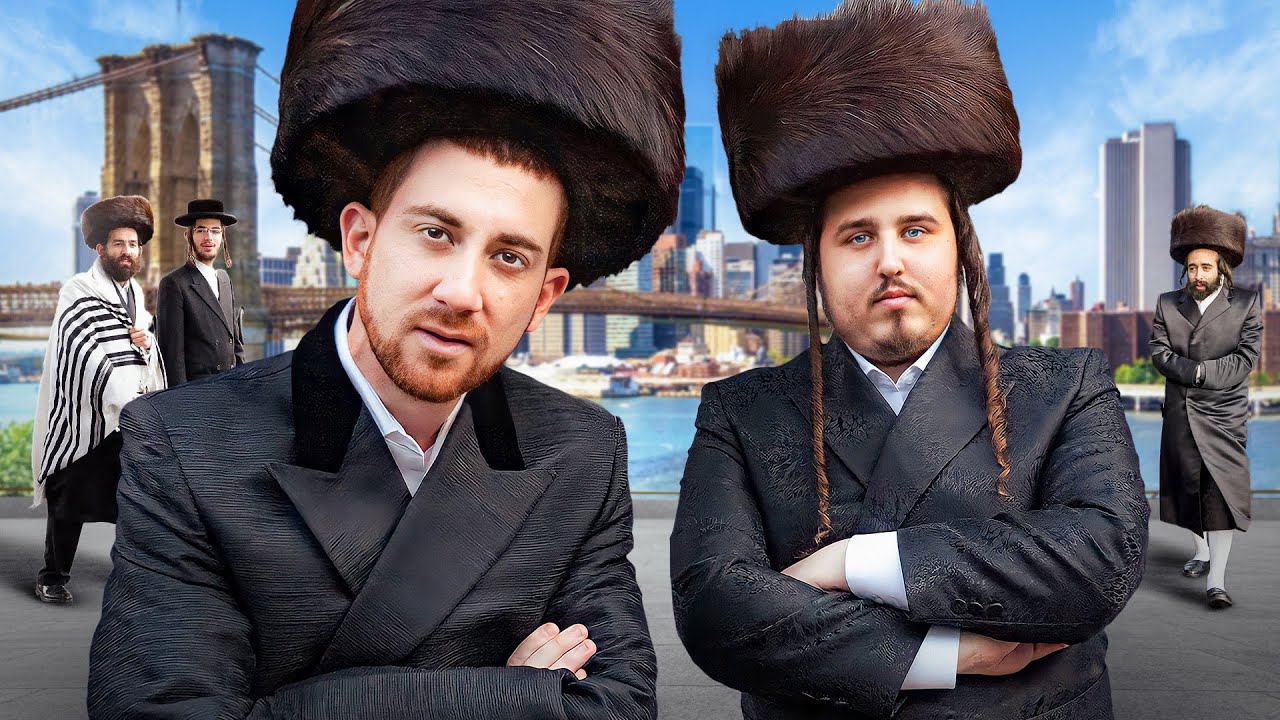
Entering America’s Most Religious Community
