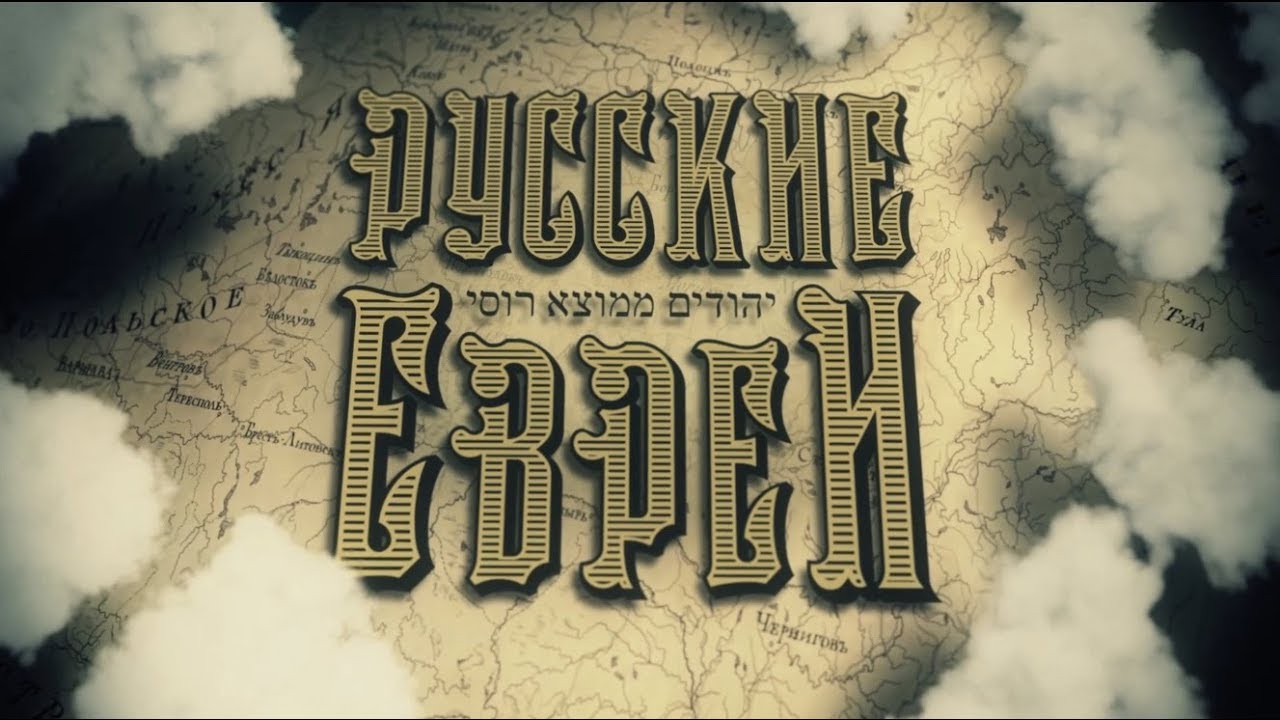
The Jews from Russia
Jews have lived in the area since antiquity, both in the Khazar Kingdom[1] and along the Black Sea coast. However, when Poland was divided in the late 18th century, a sizeable Jewish community fell under Russian control. In 1791, Catherine the Great created the Pale of Settlement to manage these people[2]. As a result, Jews were only permitted to reside in certain western districts of the empire. A distinctive and dynamic Yiddish-centered culture flourished inside the Pale, giving rise to Hasidism and the traditional shtetl (village) way of life[3].
Under several tsars, the 19th century brought about terrible difficulties. To achieve forced assimilation, Nicholas I [4] imposed the Cantonist system, which required young Jewish boys to serve in the military for decades. Alexander II provided short stretches of legal relaxation and modernization. But his murder in 1881 set off a series of horrific pogroms[5], or anti-Jewish riots. The discriminatory May Laws of 1882, which severely limited Jewish residency and economic opportunities, were also passed by the Tsarist administration. Over two million Jews left Russia between 1881 and 1914, primarily to the United States, as a result of these harsh conditions.
The Pale of Settlement was eliminated, and legal equality was first introduced during the 1917 Russian Revolution. In the hopes that communism would eradicate antisemitism, many Jews joined the Bolshevik movement[6]. The state briefly supported secular Yiddish culture and education in the early Soviet era. However, the Soviet government outlawed Zionism and crushed Judaism as a religion at the same time. State-sponsored antisemitism grew under Joseph Stalin, reaching a peak in the late 1940s and early 1950s with the "Doctors' Plot" fabrication and the death of Jewish cultural leaders[7].
Nazi Germany's invasion of the Soviet Union in 1941 marked the deadliest period of World War II. The "Holocaust by Bullets" refers to the methodical murder of about 2.5 million Soviet Jews by mobile death squads (Einsatzgruppen)[8] and local accomplices. In the Red Army, more than 500,000 Soviet Jews valiantly opposed Nazi forces at the same time[9].
Soviet Jews experienced institutional discrimination in the decades following the war, including quotas in professional and higher education. The "Refusenik" movement[10] in the 1970s and 1980s, in which Jews battled for the right to emigrate despite persecution and arrests by the government, was fueled by this discrimination. Boundaries entirely opened with the fall of the Soviet Union in 1991[11], resulting in a historic mass migration. While hundreds of thousands travelled to Germany and the United States, over a million Russian-speaking Jews came to Israel, profoundly altering its society. A smaller but vibrant Jewish community nevertheless exists in Russia today, negotiating a new era of cultural institutions in the face of shifting political conditions.
The Russian Jewish community is currently going through a crucial and more dangerous time. Geopolitical isolation, a significant new emigration surge, and a discernible change in the state's treatment of its Jewish minority have all impacted the landscape. The core Jewish population in Russia has dropped to roughly 132,000 people[12]. Russian-speaking Jews and their descendants make up approximately 1.3 million to 1.5 million people in Israel[13]. This means they account for roughly 15% of Israel's total population
-
Khazar Kingdom and Antiquity Origins: For the earliest history of Jewish settlement along the Black Sea and the Khazar theory, consult the regional overview provided by the World Jewish Congress.
-
Catherine the Great and the 1791 Decree: Detailed documentation of the Partitions of Poland and Catherine the Great's subsequent creation of the border restrictions can be found in the archival records maintained by the Jewish Virtual Library.
-
Shtetl Culture and Hasidism: The cultural development inside these borders is extensively detailed by the YIVO Encyclopedia of Jews in Eastern Europe.
-
Nicholas I and the Cantonist System: To verify the forced military service of young boys under Tsar Nicholas I, read the educational entry on historical narratives provided by Chabad.org.
-
1881 Pogroms and the 1882 May Laws: The severe legal and economic restrictions following the assassination of Alexander II are outlined by researchers at the University of Washington History Portal.
-
Bolshevik Revolution and Legal Equality: The temporary Soviet backing of secular Yiddish culture contrasted with the immediate ban on Zionism is thoroughly evaluated in the academic volumes of Jews in the Soviet Union: A History distributed by De Gruyter Brill.
-
Stalinist Purges and the Doctors' Plot: The targeting of the Jewish Anti-Fascist Committee and the "Doctors' Plot" are archived in the historical timelines of the Yad Vashem Holocaust Remembrance Center.
-
Einsatzgruppen and the 2.5 Million Victims: Documentation regarding the 2.5 million Soviet Jews trapped under occupation and targeted by mobile killing squads can be found via the Illinois Holocaust Museum and the specialized educational platform The Holocaust Explained.
-
Jews in the Red Army: Records of the 500,000 Jewish soldiers fighting in the Soviet military are highlighted by the Museum of Jewish Heritage.
-
The Refusenik Movement: The geopolitical standoff involving Soviet Jews fighting for their exit visas
-
Post-1991 Demographics: Statistical data tracking the post-Soviet aliyah wave of over a million people is hosted on the Jewish Virtual Library FSU Immigration Tables and demographic assessments from the Institute for National Security Studies.
-
The 132,000 Core Population in Russia: This specific statistic is tracked by the Institute for Jewish Policy Research (JPR) and Sergio DellaPergola's global assessments published via the Israel Central Bureau of Statistics.
-
The 1.3 to 1.5 Million Russian Israelis (15% of the Population): The size of the Russian-speaking demographic block in Israeli society is recorded, noting an enlarged community reaching up to 1.5 million citizens.
Jews from Russia
Jews from Russia

EnerJew - Israel 2015

"Shema Israel" - performed by the 'Pirchei Russia' choir at 2003!

Jewish Heritage in the CIS (FSU)